
Sweaty hands are annoying in a very specific way.
You're not necessarily hot. You may not be exercising. You're just trying to answer an email, sign a document, take notes, or use your mouse without leaving evidence of your existence across the entire desk.
For some people, clammy hands are an occasional response to heat or nerves. For others, hand sweating happens frequently enough to interfere with writing, typing, paperwork, or other everyday tasks.
Either way, a few small changes to your workspace can make sweaty hands much easier to deal with.
First, Why Do Your Hands Get Sweaty?
Sweating helps regulate body temperature, but heat isn't the only thing that can trigger it.
Stress, nervousness, physical activity, certain foods and drinks, medications, and other factors can contribute to sweating. Your palms also contain a high concentration of sweat glands.
People who experience excessive sweating of the hands may have palmar hyperhidrosis. Cleveland Clinic identifies the palms as one of the most common places for hyperhidrosis symptoms.
If your hands only get a little clammy before a presentation, you probably don't need to redesign your entire life around them.
But if sweaty palms are regularly making it difficult to hold a pen, use a mouse, handle paper, or perform other everyday activities, it's worth knowing that treatment options exist.
The American Academy of Dermatology's hyperhidrosis guide is a good starting point for learning about them.
For the everyday inconvenience, however, these workspace strategies can help.
1. Keep a Dedicated Sweat Towel Within Reach
The easiest solution is sometimes the most obvious one: give your hands somewhere to put the sweat.
Instead of wiping them repeatedly on your pants or using disposable tissues throughout the day, keep a small absorbent cloth at your desk.
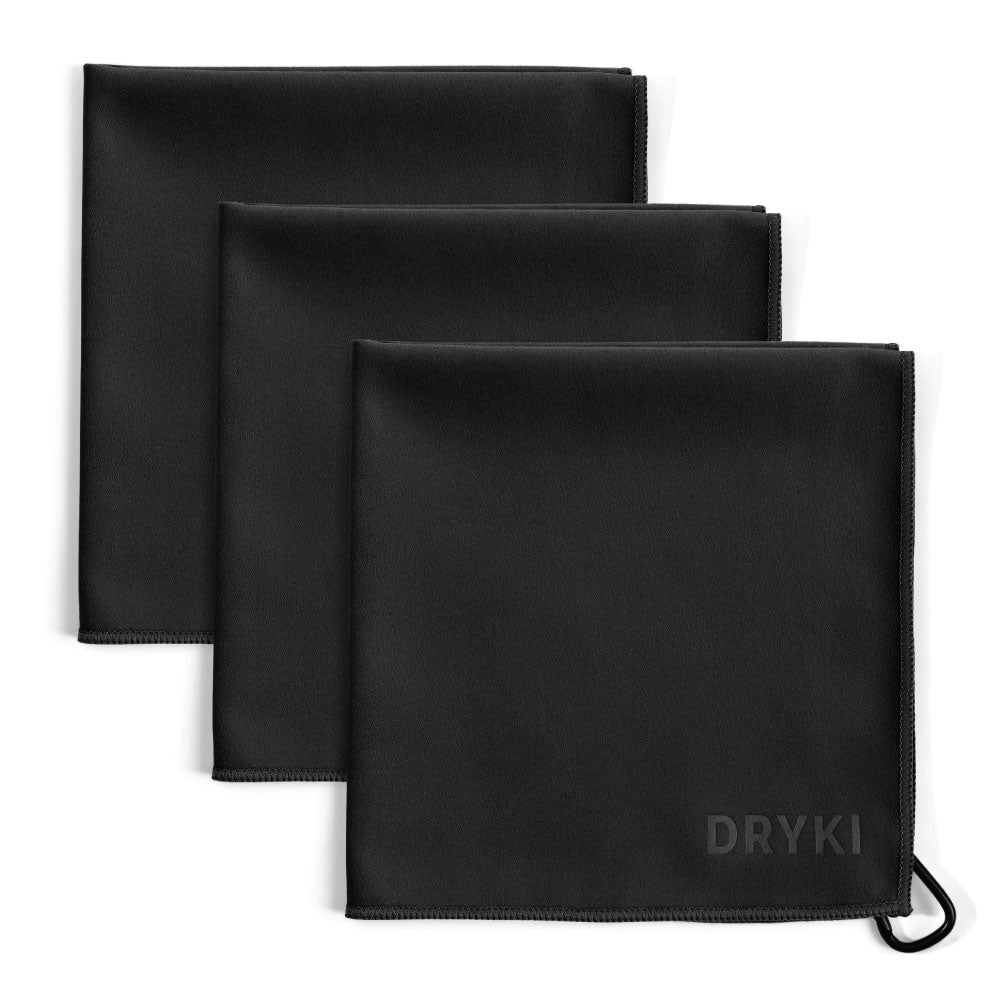
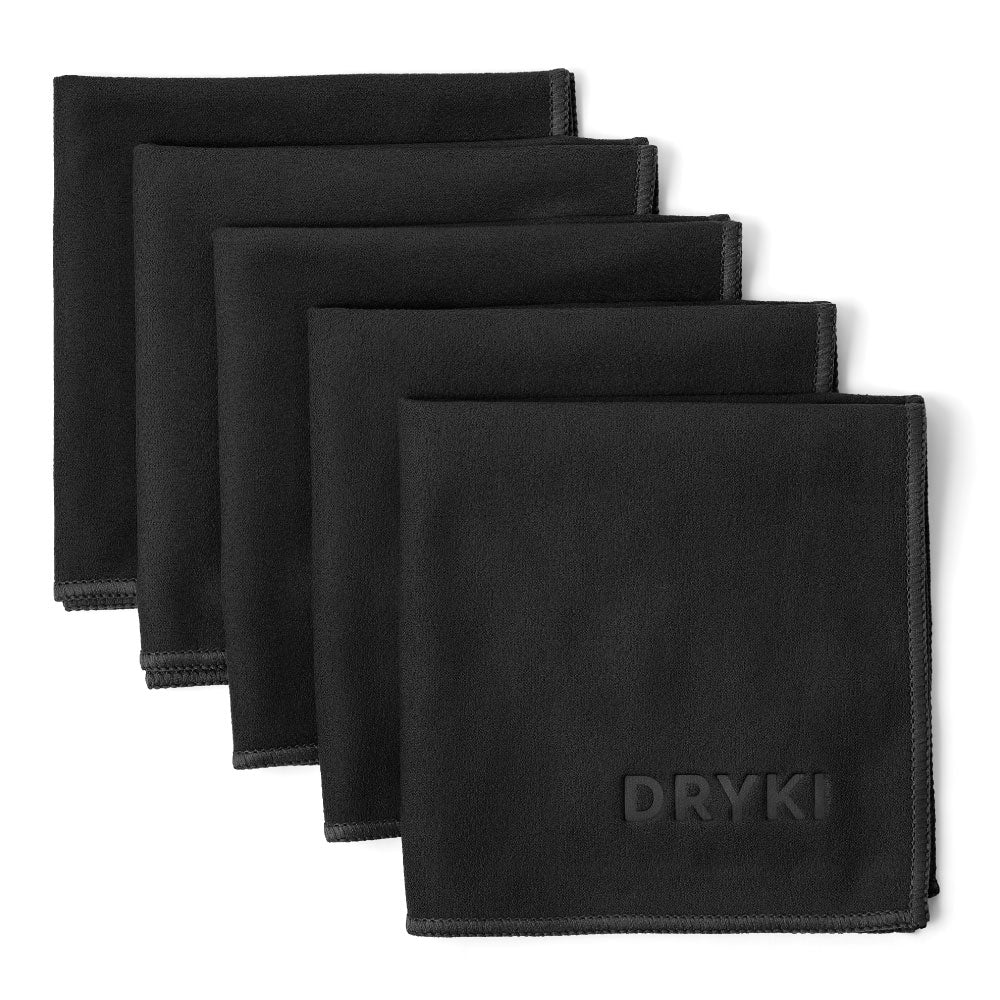
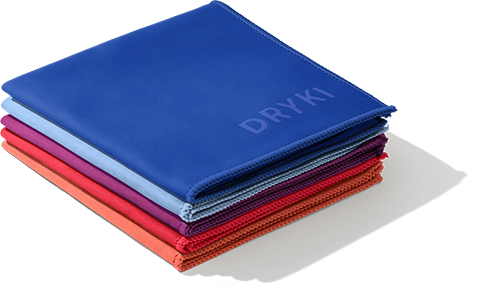
For this exact problem, DRYKI makes 10 × 10-inch pocket-sized sweat-absorbing handkerchiefs that are small enough to sit beside a keyboard, stay in a desk drawer, or travel with your laptop.
The placement matters.
If sweaty hands tend to interrupt your work, keep the towel immediately accessible rather than zipped inside a bag across the room.
A quick blot before signing a document, typing, using a touchscreen, or shaking someone's hand can become part of your routine without turning it into a production.
2. Blot Before You Touch Paper
Paper and sweaty palms are not natural allies.
If you're handwriting notes, filling out forms, drawing, or signing documents, blot your hands before you begin rather than waiting until the paper is already damp.
You can also place a spare sheet of paper beneath the side of your writing hand to create a barrier between your palm and the page.
The International Hyperhidrosis Society's work and school guide suggests thicker paper products for people dealing with sweaty hands because they're less prone to problems such as smudging.
For especially important documents, give yourself a few seconds to dry your hands first.
Your signature doesn't need a water feature.
3. Try a Pencil Grip
If sweaty fingers make pens or pencils slippery, adding texture can make them easier to control.
The International Hyperhidrosis Society specifically suggests foam pencil grips because they can both absorb some moisture and make the writing tool less slippery.
You can find inexpensive options from office and school-supply brands, or choose a pen that already has a textured or rubberized grip.
This is a particularly simple adjustment for students, artists, teachers, or anyone who still spends significant parts of the day handwriting rather than typing.
4. Choose Pens That Are Less Likely to Smear
Sweaty hands plus slow-drying ink can create a very modern form of abstract art across your notes.
If smearing is a recurring problem, experiment with different writing tools.
The International Hyperhidrosis Society recommends permanent markers and pens that are less likely to smear for people managing excessive hand sweating.
Quick-drying pens can also be worth testing, especially for left-handed writers whose hands naturally move across freshly written text.
A pen like the Sharpie S-Gel is specifically marketed with no-smear, no-bleed technology and may be worth trying if ordinary gel ink regularly ends up on your hand.
The best option will depend on how you write, so test it before committing to a twelve-pack.
5. Give Your Mouse and Keyboard Some Breathing Room
If your hands become sweatier while working at a computer, look at the environment around your hands.
A crowded desk, warm laptop, direct sunlight, or poorly ventilated workspace can make an already uncomfortable situation worse.
If possible, improve airflow around your workspace with a fan or cooler room temperature.
You can also take short breaks from continuously gripping the mouse. Let your hands rest open for a moment, blot them with your DRYKI sweat handkerchief, and return to work.
This isn't about turning your desk into an arctic research station. It's simply about removing unnecessary heat when you can.
6. Protect the Technology When You Need To
If hand sweat regularly gets onto your keyboard or touchscreen, a physical barrier may be useful.
The International Hyperhidrosis Society suggests waterproof keyboard protectors and screen protectors for people dealing with excessive hand sweating.
A washable silicone keyboard cover can be particularly useful if you're more concerned about protecting the keyboard than preserving the exact feel of the keys.
For touchscreen-heavy work, a stylus can also reduce how often your fingertips need to stay directly on the screen.
These won't stop your hands from sweating, but they can make the sweating less disruptive to the tools you're using.
7. Notice Whether Stress Is Part of the Pattern
There's a particularly unfair loop that can happen with sweaty palms:
You notice your hands are sweating.
You worry someone will notice.
Now you're nervous.
Your hands sweat more.
Emotional stress can trigger sweating, including on the palms. Cleveland Clinic lists anxiety and stress among common reasons people may sweat more.
Pay attention to when the problem is worst.
Is it during ordinary solo work? Or does it suddenly increase before presentations, interviews, meetings, handshakes, or deadlines?
If nerves are part of the pattern, dealing with the stressful situation itself may help alongside your practical sweat-management strategies.
And for the moments when you simply need to get on with the meeting, having a small way to manage sweaty hands within reach can remove one thing from your mental checklist.
8. Be Strategic Before Handshakes and Meetings
If you know an introduction or meeting is coming up, don't wait until someone's hand is already moving toward you.
Blot your palm discreetly beforehand.
Keeping a small towel in your pocket or bag makes this easier because you don't need to leave the room or search for a restroom immediately before every introduction.
This same strategy works before:
- Signing paperwork
- Handing someone a document
- Using a shared touchscreen
- Giving a presentation
- Handling delicate materials
- Taking handwritten notes in a meeting
It's not about obsessively keeping your hands bone-dry all day. It's about managing the moments when sweat is most likely to interfere with what you're doing.
9. Identify Your Personal Triggers
If your palms sweat unpredictably, start noticing what was happening immediately beforehand.
Was the room unusually warm?
Were you drinking coffee?
Were you rushing to meet a deadline?
Were you nervous about a meeting?
The American Academy of Dermatology notes that heat, spicy foods, caffeine, alcohol, and emotions such as nervousness or stress can trigger excessive sweating for some people.
You don't necessarily need to eliminate everything that might make you sweat.
Knowing your patterns simply gives you more control over situations where you'd especially prefer dry hands.
10. Know When Sweaty Hands Are More Than an Inconvenience
Occasionally clammy hands and persistent excessive sweating aren't necessarily the same thing.
If your palms sweat heavily even when you're not hot, or the sweating regularly interferes with work, school, technology use, writing, or everyday activities, consider talking to a healthcare professional or dermatologist.
The American Academy of Dermatology notes that hyperhidrosis treatment is intended to reduce sweating when it interferes with daily life and specifically gives being able to hold a pen or mouse comfortably as an example.
Treatment options can vary depending on the cause and severity and may include antiperspirants, iontophoresis, medications, injections, or other approaches.
That part deserves professional guidance rather than an internet productivity hack.
Build a Workspace That Works With You
You don't need a complicated desk setup to make sweaty hands easier to manage.
Start with the moments that actually cause problems.
If paper gets damp, create a barrier and dry your hands before writing. If pens slip, try a better grip. If your keyboard gets wet, consider a protector. If heat makes things worse, improve airflow.
And if wiping your palms on your pants has quietly become part of your work routine, keeping a DRYKI pocket-sized sweat towel beside your keyboard is a considerably more intentional alternative.
The goal isn't to spend the entire workday thinking about your hands.
It's to set things up so you don't have to.
Blog posts

Sweaty Hands While Playing an Instrument? Here’s What Musicians Can Do

Why Do Some People Sweat More Than Others?

8 Back-to-School Backpack Essentials for Active Kids
 DRIES FAST. NEVER SMELLS.
 ABSORBS SWEAT AND TEARS.
 FITS IN YOUR POCKET.
Product list